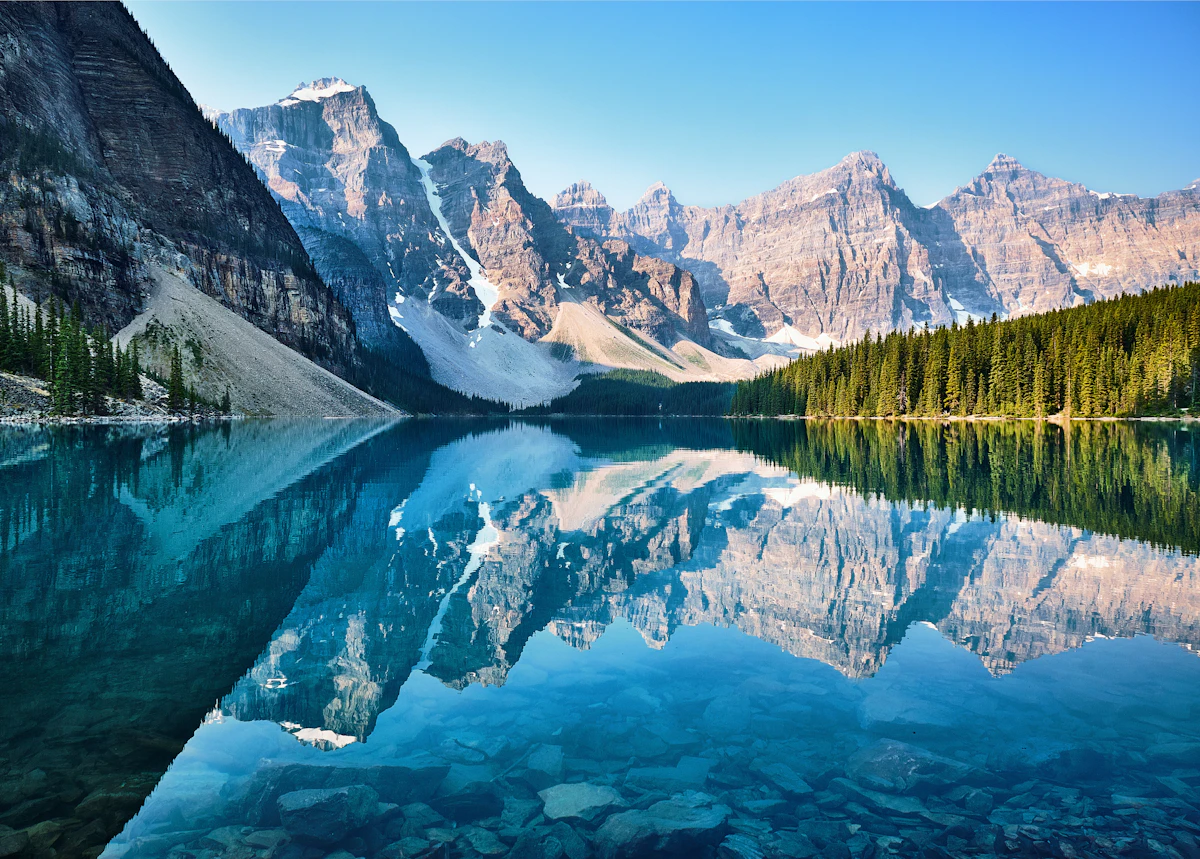
The essentials in 4 bullets
- Crowd-free hours: arrive Lake Louise before 6:30 AM or after 7:00 PM. Between 9 AM-5:30 PM = packed.
- Moraine Lake: private vehicles BANNED since 2023. Parks Canada shuttle book 4-6 weeks ahead at reservation.pc.gc.ca, $8/adult.
- Lake Louise parking: 425 paid spots ($21/day), fill by 6:30-7 AM in July-August. Overflow to ski resort park-and-ride ($10 + free shuttle).
- 5 secret viewpoints: Sanson's Peak (Sulphur Mtn boardwalk), Bow Lake, Peyto upper deck, Castle Junction at sunset, Vermilion Lakes Road dawn.
Why Banff in 2026 feels harder than it used to
Banff National Park welcomed over 4.2 million visitors in 2024 according to Parks Canada — and the trajectory for 2026 points slightly higher again. The infrastructure (parking lots, lakeshore boardwalks, bathroom capacity) was built for roughly 60% of current volume. The 2023 ban on private vehicles at Moraine Lake was the first major restriction; Lake Louise itself has tightened access through the Roam transit system and the Ski Resort park-and-ride. None of these changes will be reversed for 2026.
The implication for travellers: you cannot just show up at 10 AM and expect to park. You need a strategy — and that strategy is mostly about timing your day around 6:30 AM arrivals or 7:00 PM evening shifts.
The real crowd-free windows (and why they matter)
5:30-7:00 AM — the lakeshore is glassy, mist often rises off the water, and the morning light is unbelievable for photography. Maybe 30-50 other people total. Sunrise in July is around 5:30 AM in Banff; by 7 AM the tour buses start arriving.
7:00 PM-9:00 PM — day-trip buses (most departing Calgary or Banff town to make 9:30 PM check-ins back) have left. Light is golden, temperatures drop comfortably, and the parking lot has 60-70% capacity instead of 100%. The downside: the gift shop and Fairmont Chateau dining close, so this is a pure-photography slot.
What to avoid: 9:00 AM-5:30 PM. Lake Louise looks like a Disney attraction queue from the upper deck — shoulder-to-shoulder along the canoe dock, 20-min waits to take a clear photo, and parking redirected to overflow lots 8 km away.
Parking and access — the real picture
Lake Louise lakeshore lot: 425 paid spots, $21/day. Fills 6:30-7:00 AM peak July-August. Parks Canada attendants close the entrance once full and redirect vehicles. Pay station accepts credit/debit only, no cash.
Lake Louise Ski Resort park-and-ride: $10/day, free shuttle to lakeshore every 15 minutes 7 AM-7 PM. The smart alternative — drop the car, take the shuttle, return when ready. Lot rarely fills.
Roam Transit Route 8 from Banff town to Lake Louise: free with Banff municipal accommodations pass, hourly service. Slow but eliminates parking entirely.
Cycling Bow Valley Parkway: 15 km paved from Lake Louise village to lakeshore. Most reliable option for fit travellers. Bike rentals at Wilson Mountain Sports in the village.
Moraine Lake: NO private vehicles. Parks Canada shuttle ($8 adult) — book 4-6 weeks ahead at reservation.pc.gc.ca. Roam bus ($10 day pass) available as backup. Licensed tour buses and taxis/Uber permitted. Cycling permitted (12 km uphill from Lake Louise village — challenging climb). Do not attempt to drive in — vehicles are turned around at the gate.
5 secret viewpoints — equally stunning, fraction of the crowd
1. Sanson's Peak boardwalk (Sulphur Mountain)
The Banff Gondola brings everyone to the observation deck. From there, almost nobody walks the 1.5 km boardwalk to Sanson's Peak weather station. Same elevation, same 360° Rocky Mountain panorama, and you can sit on the wood platform with maybe 5-10 other people. Take the gondola back down regardless — the boardwalk is easy walking but the descent on foot is steep and uneven.
2. Bow Lake (Icefields Parkway)
Equally turquoise, framed by Crowfoot Mountain and the Wapta Icefield. The historic Num-Ti-Jah Lodge (red roof) anchors the south shore. Free pullout parking along Highway 93 — usually 10-20 other vehicles versus the 400+ at Lake Louise. The water colour rivals or exceeds Lake Louise depending on the season's glacial melt.
3. Peyto Lake upper viewing platform (Bow Summit)
The lower platform (paved, wheelchair-accessible) is where 80% of tour buses stop — packed, partial views obstructed by trees that have grown since the platform was built. The upper viewing platform requires another 400m of gentle uphill but rewards with the iconic wolf-head shape of the lake unobstructed. Even at 11 AM, you'll find space.
4. Castle Junction at sunset
Castle Mountain catches alpenglow (the rose-gold light at last sun) on its eastern face. The pullout on Highway 1 (just past the Castle Junction Esso) gives clear sightlines. Almost no one stops here — most photographers head for Lake Louise or Vermilion Lakes. Best window: 9:00-9:30 PM in July when the sun finally drops below the western ridges.
5. Vermilion Lakes Road at dawn
Three small lakes immediately outside Banff town with a paved 3.5 km road along the south shore. Pre-dawn (4:30-5:30 AM), beaver dams create perfect reflections of Mount Rundle. Most early-rising tourists go to Lake Louise — this spot stays empty even on weekends. Bonus: you'll likely see elk or beaver as a wildlife reward.
Weather and what to pack — July-August 2026
Climate normals: July daytime 22°C, nights 8°C; August daytime 21°C, nights 6°C. Thunderstorm risk every afternoon 2-6 PM — plan high alpine hikes for morning start (7-9 AM), be off summits by noon. Snow possible above 2 500 m even in July (Eiffel Lake, Lake Agnes upper trails — carry microspikes if hiking these). Smoke from BC/Alberta wildfires affected 2023-2025 summers significantly — check airquality.alberta.ca daily, plan low-altitude alternatives if AQI exceeds 100.
Pack list (do not skip): bear spray (mandatory for backcountry, strongly advised for shoulder-trafficked trails — rent at MEC Banff or Atmosphere Lake Louise, $10/day rental, $50 if you buy), 1 L water minimum per person (alpine air dries quickly), SPF 50 (UV intensity at altitude is brutal), layered clothing (a fleece for mornings even in July), light rain shell, real hiking boots not sneakers, headlamp if any chance of evening descent.
Bear safety basics — 2026 trail status
Both grizzly and black bears are active May through October. Cascade Mountain and Johnston Canyon have had repeated closures since 2024 due to grizzly activity — check parks.canada.ca/banff bulletin DAILY before any hike. If a trail is rated "group of 4+ mandatory," the rule is actively enforced; rangers turn solo hikers around at trailheads.
Standard precautions: carry bear spray accessible (not buried in your pack), hike in groups of 4 or more on flagged trails, make noise around blind corners (talking, clapping — bear bells are noted as ineffective by Parks Canada), never carry food or scented items in tents, store food in vehicles or bear-proof lockers, never approach wildlife for photos.
FAQ
What time should I arrive at Lake Louise to avoid crowds?
Can I drive to Moraine Lake in summer 2026?
What is the parking situation at Lake Louise?
Are there secret viewpoints away from the crowds?
Do I need to worry about bears in Banff?
What is the weather forecast for July-August 2026?
Are you going to set your alarm for 5:00 AM — or queue with 400 other people at noon for the same photo?
- Parks Canada — Banff National Park, reservation.pc.gc.ca shuttle booking
- Roam Transit — bow Valley regional bus schedules
- Alberta Air Quality Health Index — airquality.alberta.ca
- Parks Canada wildlife bulletin — parks.canada.ca/banff
- Environment Canada climate normals 1991-2020 — Banff and Lake Louise