People ask "when is the best time to visit Canada?" as if the answer fits on a calendar. It doesn't. Canada is the second-largest country on Earth — six time zones, half a dozen climates, oceans on three sides. The honest answer is: it depends entirely on which Canada you're going to. So instead of picking a month, pick a region — then let this guide tell you when that region is at its absolute best.
A July week that is postcard-perfect in the Rocky Mountains can be a grey wash-out on the Pacific coast and bitterly short in the Arctic. The prairies bake while the Maritimes catch cold Atlantic fog. Treating "Canada" as a single destination with a single high season is the most common planning mistake we see — and it's the reason travellers arrive to closed trails, sold-out lodges, or weather they never expected. Below, we break the country into its six real travel regions and give each one its own clock.
Canada, Region by Region
The mountains run on snowmelt, not on the calendar. High passes and alpine trails don't fully clear until late June, and by early October the first snows return. If your dream is turquoise lakes, larch-gold hikes and open shuttles to Moraine Lake, you are working with a genuinely short window. Mid-September is the connoisseur's pick: the summer crush fades, the larches turn gold, and prices ease — but the snow gates haven't dropped yet. Come in winter and it's a different, ski-first world at Banff and Lake Louise.
Best window rewards
- All alpine trails and park shuttles open
- Lakes at their vivid turquoise best (July)
- Golden larch season (mid-to-late September)
Timing traps
- Moraine Lake needs advance shuttle booking in summer
- High trails snowbound into late June
- Winter tires mandatory on mountain highways
This is Canada's most forgiving region. A mild maritime climate keeps Vancouver green and walkable almost year-round, with snow at sea level a rarity. Summer delivers dry, golden weeks perfect for the seawall, the ferries and Vancouver Island. But the coast has a second, contrarian season most guides ignore: from November to February, Tofino turns storm-watching into a genuine reason to travel, with Pacific swells hammering the beaches while you watch from a warm lodge. The catch is the long grey rain that settles in from October.
Best window rewards
- Driest, sunniest stretch of the Canadian year (July–Aug)
- Whale watching off the island (spring through fall)
- Winter storm-watching in Tofino & Ucluelet
Timing traps
- Persistent rain from late October into spring
- Ferry and lodge demand spikes in July–August
- Short shoulder before crowds arrive in June
The prairies are a region of extremes with two very different peaks. Summer is warm, dry and wide open — endless canola fields, prairie festivals, and the Calgary Stampede in early July. But Manitoba hides one of the planet's great wildlife spectacles: Churchill's polar bears gather on the Hudson Bay shoreline in October and November, and beluga whales fill the estuary in July. Winter here is the hardest in populated Canada, routinely dropping below −20°C, so plan the deep-cold months around a specific indoor or wildlife purpose, not sightseeing.
Best window rewards
- Calgary Stampede and prairie festivals (July)
- Churchill polar bear season (Oct–Nov)
- Beluga whales in the Churchill River (July)
Timing traps
- Brutal cold and wind from December to February
- Churchill tours book a year ahead
- Long driving distances between highlights
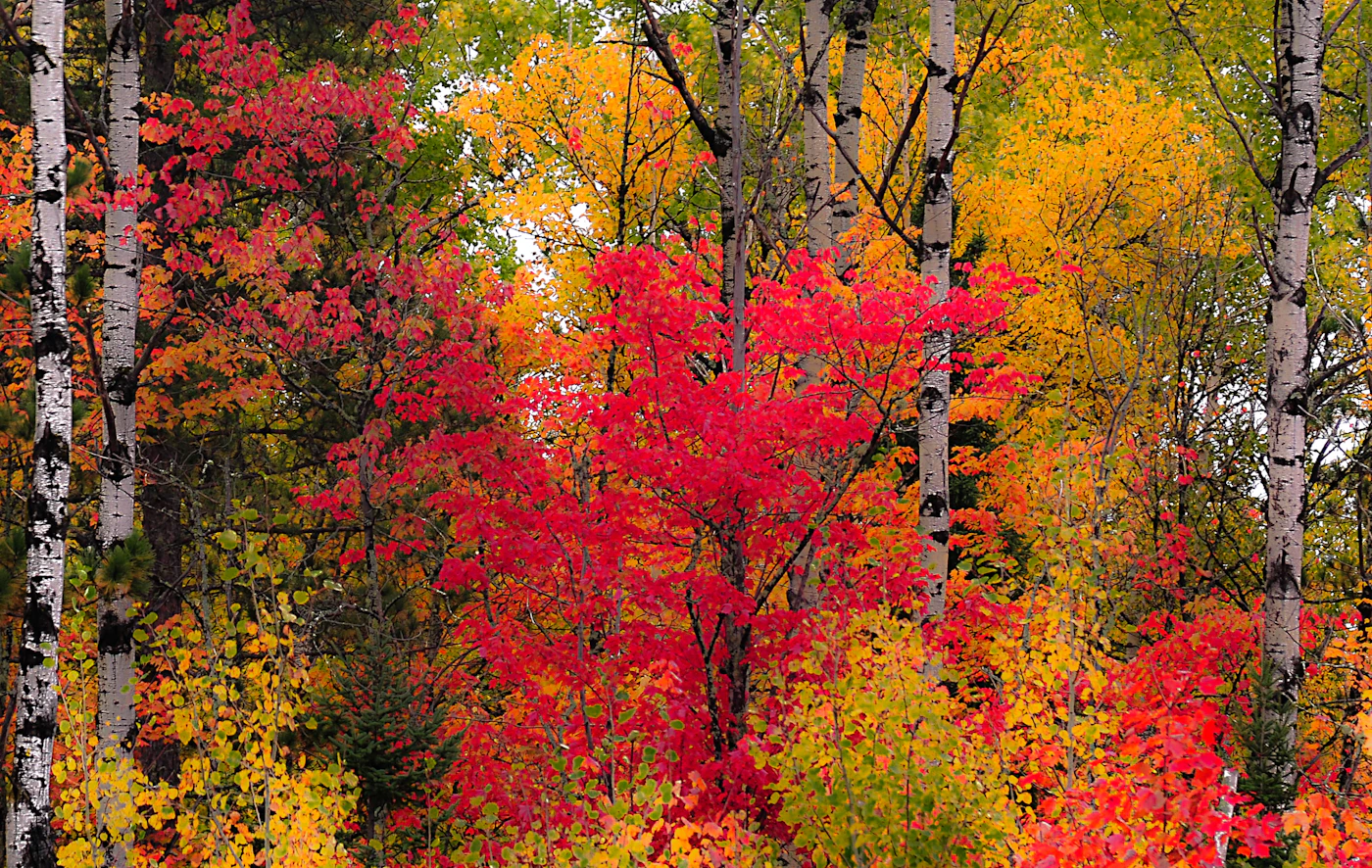
Ontario is Canada's most flexible region for a city-and-nature mix, and it carries a long, generous shoulder on both sides of summer. Toronto and Niagara come alive from May, Ottawa's Canadian Tulip Festival peaks in mid-May, and the Great Lakes cottage country hums all summer. The real signature moment, though, is autumn: Algonquin Provincial Park and the Muskoka forests blaze red and gold from late September into mid-October — arguably the finest foliage drive in the country outside Quebec. Winter is cold but manageable, with December holiday sparkle in the cities.
Best window rewards
- Ottawa Tulip Festival (mid-May)
- Great Lakes beaches and cottage country (summer)
- Algonquin fall foliage (late Sep–mid-Oct)
Timing traps
- Humid, hot spells in July and August
- Grey, slushy transition in March
- Foliage window is short — book cottages early
The east has the country's most distinct sense of season. Quebec City and Montreal shine all summer with festivals, then the Laurentians and Cape Breton's Cabot Trail catch fire with foliage from early to mid-October — the tightest, most spectacular colour window in Canada. Spring belongs to Newfoundland, where icebergs drift down "Iceberg Alley" from May into June and whales follow. Winter narrows the region to its cities, where Quebec's Winter Carnival and old-town Christmas markets turn the cold into the whole point.
Best window rewards
- Cabot Trail & Laurentian foliage (early–mid October)
- Newfoundland icebergs and whales (May–June)
- Quebec Winter Carnival & Christmas markets
Timing traps
- Coastal fog on the Atlantic in early summer
- Foliage peak lasts barely two weeks
- Rural Maritimes quiet down sharply off-season
The North runs on light, not on temperature. Summer brings the midnight sun — near-endless daylight for canoeing the Yukon, driving the Dempster Highway, and reaching the tundra while it's briefly warm and green. Then comes the reason most travellers point north: the aurora borealis. Yellowknife and Whitehorse sit under the auroral oval, and the two prime windows are late August to mid-October (milder, roads open) and January to March (coldest, darkest, crispest displays). This is the one region where "when" and "what you'll see" are the same question.
Best window rewards
- Midnight sun and open roads (June–August)
- Reliable aurora over Yellowknife & Whitehorse
- Fall aurora paired with milder nights (Sep–Oct)
Timing traps
- Extreme cold on winter aurora trips (−30°C nights)
- Dark, low-value shoulder in November
- Limited flights and lodging — book far ahead
The Region-at-a-Glance Matrix
If you remember one thing, remember this: match the region to the window, not the month to the country. Here's every region's peak on a single line.
| Region | Prime window | Signature payoff | Time to avoid |
|---|---|---|---|
| Canadian Rockies | Late Jun – early Sep | Turquoise lakes, golden larches | Nov–Apr (for hiking) |
| Pacific Coast | Jun – Sep | Dry seawall days, whale watching | Oct–Mar rain |
| The Prairies | Jun – Aug / Oct–Nov | Stampede, then polar bears | Dec–Feb deep freeze |
| Central & Great Lakes | May – Oct | Algonquin autumn colour | March slush |
| Quebec & Atlantic | Jun – Sep + early Oct | Cabot Trail foliage, icebergs | Rural winter |
| The North | Jun–Aug & Sep–Oct / Jan–Mar | Midnight sun, aurora | November darkness |
How to Sequence a Two-Region Trip
Most visitors want more than one Canada in a single trip. The trick is to chain regions whose peaks overlap, rather than fighting the seasons. A few combinations that actually line up:
- Late June — Rockies + Prairies: alpine trails have just opened and Calgary is warming up toward Stampede. Fly into Calgary, split west to Banff and east to the plains.
- Late September — Great Lakes + Quebec & Atlantic: the single best foliage corridor in the country. Start in Algonquin, then follow the colour east into the Laurentians and Cape Breton.
- August into September — Pacific Coast + a northern add-on: dry coastal weeks, then fly north as the aurora season begins. Two completely different Canadas, back to back.
What to avoid: stitching together regions whose peaks fall in opposite halves of the year — a Rockies-in-summer plus Churchill-polar-bears itinerary, for instance, simply can't share a calendar.
Recommended Gear
Pack for the Region You Chose
From Pacific rain to a −30°C aurora night, each region asks for different gear — these essentials cover the range.
As an Amazon Associate, I earn from qualifying purchases.
Frequently Asked Questions
Is there one best time to visit all of Canada?
No — and that's the whole point. A week that's flawless in the Rockies can be a rain-soaked write-off on the Pacific coast and far too cold in the North. Pick the region first, then time the trip to that region's peak rather than to a generic "Canada season."
Which Canadian region has the widest travel window?
The Pacific coast around Vancouver and Vancouver Island is the most forgiving. Its mild maritime climate keeps the region walkable and green almost year-round, with rare snow at sea level. The trade-off is a long, grey rainy stretch from November through February.
When should I go north for the aurora?
The two strongest aurora windows over Yukon and the Northwest Territories are late August to mid-October and January to March. Deep winter gives the crispest displays under dark, clear skies; the fall window pairs the lights with milder temperatures and open roads.
Can I combine two Canadian regions in one trip?
Yes, but let the seasons decide the order. Late June pairs the Rockies with the Prairies; late September chains Ontario's Great Lakes forests into Quebec and Atlantic Canada at peak foliage. Avoid stitching together regions whose peaks fall in opposite halves of the year.
Plan Around the Right Region
Get our free Canada travel guide with region-by-region itineraries, timing checklists, and packing lists for every climate.
Download Free Guide →