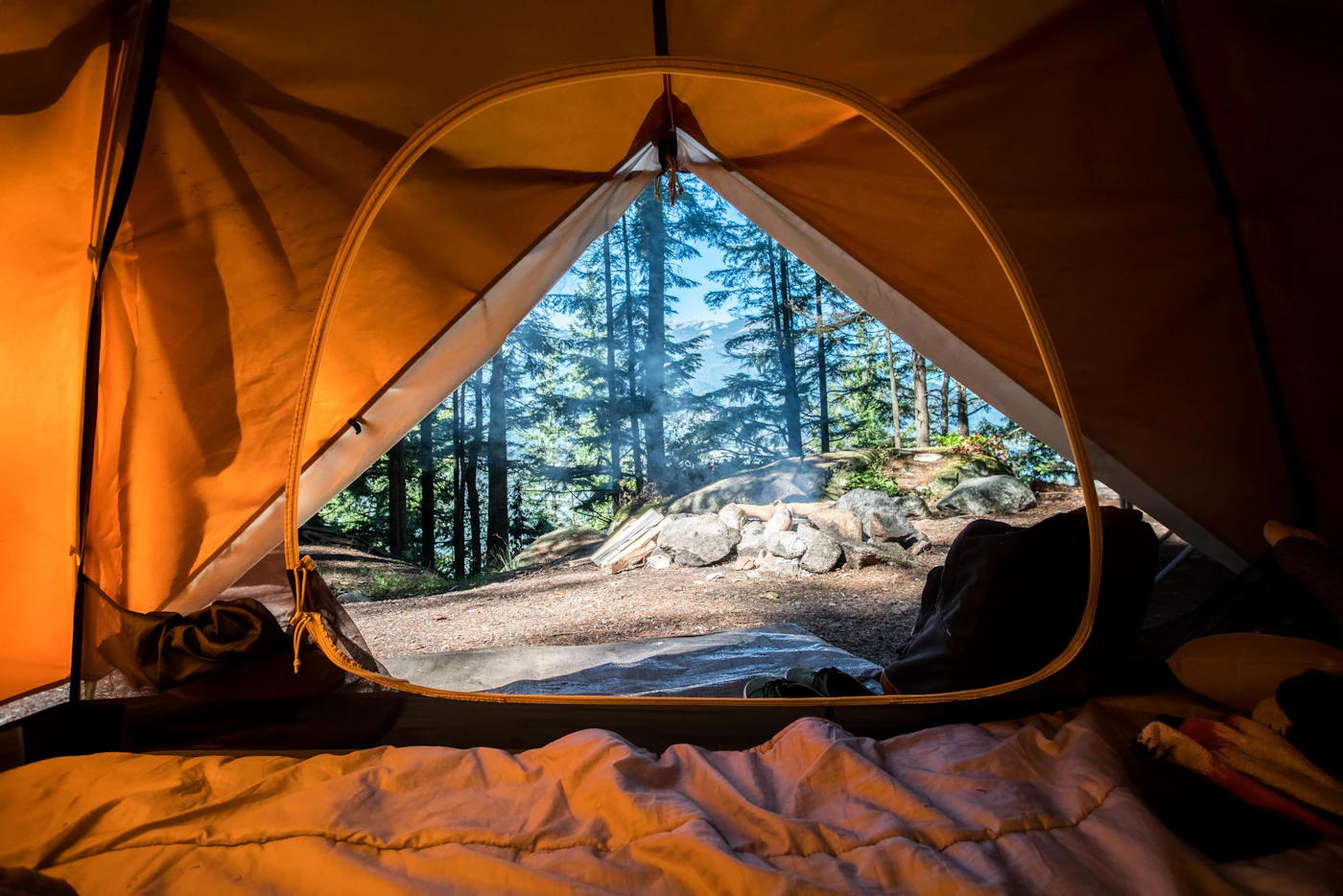
Canada holds some of the greatest camping terrain on Earth — from glacial lakes in the Rockies to wild Atlantic shorelines and boreal forest stretching to the horizon. Whether you want a serviced family site in a national park or a remote backcountry route with no one else in sight, this guide covers the best campgrounds, how to book them, and everything you need to pack for a safe, memorable trip.
How to Book Camping in Canadian National Parks
Parks Canada operates the national reservation system at reservation.pc.gc.ca. Reservations open in rolling windows — typically January through April depending on the park — and popular sites like Tunnel Mountain in Banff or Pinery in Ontario sell out within minutes of becoming available. Here is how to maximise your chances:
- Create your Parks Canada account well before the reservation window opens
- Set a calendar reminder for the exact date and time reservations go live
- Have your credit card, dates, and vehicle information ready before you log in
- Consider weekday arrivals and mid-season trips (late May or September) for better availability
- Check for cancellations — sites are released back into the system regularly right up to the arrival date
Best National Park Campgrounds in Canada
Banff National Park — Alberta
Banff has five main campgrounds ranging from full-hookup RV sites to walk-in tent-only spots. Tunnel Mountain Village sits just 2.5 km from Banff townsite with easy access to hiking, restaurants, and the famous hot springs. Two Jack Lakeside, a smaller walk-in campground overlooking a mountain lake, is arguably the most scenic campground in the Canadian Rockies. Johnston Canyon Campground, set in a canyon with a waterfall hike directly from your tent, is a spectacular choice for families.
- Two Jack Lakeside — walk-in, stunning views, book the moment reservations open
- Johnston Canyon — canyon setting, excellent trail access, family-friendly
- Tunnel Mountain Village II — full hookups, close to town, good for first-timers
Jasper National Park — Alberta
Jasper is larger and generally less crowded than Banff, offering a more genuine wilderness experience. Whistlers Campground, the largest in Canada at over 700 sites, sits at the base of Whistlers Mountain with the SkyTram departing nearby. Wabasso, set along the Athabasca River with stunning mountain views, is a quieter alternative. Wapiti is one of the few Parks Canada campgrounds open year-round, making it the gateway to winter camping and northern lights viewing.
- Wabasso — quieter, forested sites along the Athabasca River valley
- Whistlers — largest campground in Canada, full services available
- Wapiti — year-round access, northern lights in winter
Pacific Rim National Park Reserve — British Columbia
Camping at Pacific Rim means waking to the sound of Pacific Ocean surf on wild, driftwood-strewn beaches. Green Point Campground is perched on a bluff directly above Long Beach — one of the most dramatic camping settings in Canada. Sites here are in high demand; reservations open in January and the most coveted spots disappear within hours. Sea kayakers and surfers use this as a base for exploring Clayoquot Sound, a UNESCO Biosphere Reserve.
- Green Point — ocean bluff setting, stunning sunsets, walk-in sites closest to beach
- Broken Islands Group — boat-access only, one of Canada's top sea kayaking destinations
Bruce Peninsula National Park — Ontario
Bruce Peninsula offers the Niagara Escarpment meeting crystal-clear Georgian Bay — some of the most beautiful freshwater scenery in Canada. Cyprus Lake Campground is the main campground, with the famous Grotto just a 2 km hike away: a sea cave carved into limestone cliffs where turquoise water glows in the afternoon light. Camping here requires early reservations as the park is within driving distance of Toronto and is extremely popular on summer weekends.
- Cyprus Lake — easy hiking access to The Grotto and Georgian Bay cliffs
- Halfway Log Dump — remote walk-in sites on Georgian Bay, for experienced campers
Algonquin Provincial Park — Ontario
Established in 1893, Algonquin covers nearly 8,000 square kilometres of boreal forest, Canadian Shield lakes, and river systems. Car-accessible campgrounds like Mew Lake and Canisbay Lake are family-friendly with flush toilets and nearby beaches. The real draw is the backcountry canoe system: over 1,500 km of paddling routes connecting hundreds of portage lakes, with designated backcountry campsites bookable through Ontario Parks. Moose sightings at dawn are practically guaranteed.
- Mew Lake — family campground near Highway 60, great for autumn leaf-peeping
- Canisbay Lake — waterfront sites, excellent for swimming and canoeing
- Backcountry canoe routes — Magnetawan, Tim River, Barron Canyon via ontarioparks.com
Cape Breton Highlands National Park — Nova Scotia
Cape Breton's national park sits along the Cabot Trail, consistently ranked among the world's most scenic drives. Ingonish Beach Campground offers direct beach access on a rare freshwater lagoon separated from the Atlantic by a sandbar. Cheticamp Campground on the park's west side faces the warm waters of the Gulf of St. Lawrence. Both make excellent bases for hiking the Skyline Trail — where moose sightings at dusk are almost guaranteed on this cliff-edge boardwalk overlooking the ocean.
- Ingonish Beach — rare freshwater beach, whale watching nearby, spectacular Highland setting
- Cheticamp — Gulf of St. Lawrence views, Acadian community nearby, open May–October
Backcountry Camping: What You Need to Know
Backcountry camping — hiking or paddling to a remote campsite with everything you need on your back — is one of the most rewarding experiences Canada offers. The wilderness campsite networks in Banff, Jasper, Algonquin, and Gros Morne are among the finest in North America. But backcountry camping requires preparation that frontcountry camping does not.
Leave No Trace Principles
Parks Canada and provincial park authorities require all backcountry campers to follow Leave No Trace principles: pack out everything you pack in, use designated fire rings where fires are permitted, camp on durable surfaces, and keep at least 60 metres from water sources when disposing of waste. In many backcountry zones, fires are prohibited entirely — always bring a certified camp stove.
Wildlife Safety in Bear Country
Most of Canada's premier backcountry camping is in bear country — both black bears and grizzly bears. These rules are non-negotiable:
- Store all food, garbage, and scented items in a certified bear canister or food lockers where provided — never in your tent
- Cook and eat at least 100 metres from where you sleep
- Carry bear spray and know how to use it before you need it
- Make noise on the trail, especially in dense bush and near streams where bears cannot hear you approach
- Never run from a bear — know the difference between black bear and grizzly bear defence strategies
Best Campgrounds for Families with Kids
Family camping success depends on choosing campgrounds with the right mix of amenities — flush toilets, nearby swimming, and enough programming to keep kids engaged. These parks consistently earn top marks from Canadian families:
- Kouchibouguac National Park, New Brunswick — warm lagoon beaches, cycling trails, excellent interpretive programs for kids, boardwalk through sand dunes
- Fundy National Park, New Brunswick — world's highest tides, heated outdoor pool, tidal flats to explore at low tide, accessible family trail system
- Waterton Lakes National Park, Alberta — smaller and more intimate than Banff, frequent bear and deer sightings right from the campground
- Forillon National Park, Quebec — cliffs, seals, whales and sea kayaking on the Gaspe Peninsula; excellent supervised beach swimming
- Point Pelee National Park, Ontario — monarch butterfly migration in September, exceptional boardwalk birding for young naturalists
Essential Camping Gear
Packing the right gear makes the difference between a memorable trip and a miserable one. Canadian weather is unpredictable — a warm sunny afternoon can become a cold, rainy evening in mountain parks. Layering is essential, and quality rain gear is non-negotiable even in summer.
Four-Season Tent
A reliable, waterproof tent rated for Canadian conditions — freestanding with a full fly that reaches the ground for wind and rain protection.
View on Amazon.caBear Spray
Mandatory in grizzly country. Counter Assault and UDAP brands are widely recommended. Carry it accessible on your hip, not buried in your pack.
View on Amazon.caBear Canister
Required in certain backcountry zones in Banff, Jasper, and Pacific Rim. The BearVault BV500 and Garcia Backpacker are Parks Canada approved models.
View on Amazon.caPro Tips for Booking and Camping in Canada
A few insider strategies can dramatically improve your national park camping experience:
- Book the shoulder seasons — The last two weeks of May and all of September offer excellent weather in most parks, fewer crowds, and better site availability. Fall camping in Algonquin and Banff is particularly spectacular with autumn foliage.
- Arrive on a Sunday or Monday — The majority of campers arrive Friday or Saturday. A Sunday arrival often finds quiet campgrounds even without a reservation at provincial parks that operate first-come, first-served.
- Check oTENTik and Camping Cabins — Parks Canada operates glamping-style roofed accommodations in many parks, ideal if you want the outdoors experience without hauling a tent. These book even faster than regular campsites.
- Download offline maps before you go — Cell service is non-existent in most backcountry areas. AllTrails, Gaia GPS, and Avenza Maps all allow offline map downloads.
- Use the Parks Canada app — real-time campsite availability, trail conditions, fire bans, and wildlife warnings are updated daily during the camping season.
Planning Your Canadian Camping Trip
The most important step is choosing a destination that matches your experience level and the season. First-time campers should start with a well-serviced national park campground in July or August — Banff, Algonquin, or Pacific Rim — where park staff, facilities, and cell service are available. More experienced campers ready for backcountry adventure have their pick of some of the finest wilderness in the world: the Rockwall Trail in Kootenay National Park, the Berg Lake Trail in Mount Robson Provincial Park, or the remote interior canoe routes of Quetico Provincial Park in northern Ontario.
For a broader introduction to Canada's outdoor landscapes, read our complete guide to planning a trip to Canada and our full breakdown of Canada's best national parks before booking your sites.
Regardless of where you go, leave the campsite better than you found it, follow wildlife safety guidelines without exception, and embrace the unpredictability of the Canadian outdoors. The reward is an experience genuinely unlike anything else on Earth — a night sky unpolluted by city lights, the sound of a loon across a still lake, or a grizzly bear browsing at dusk on a distant slope. These are the moments that make Canada's camping extraordinary.