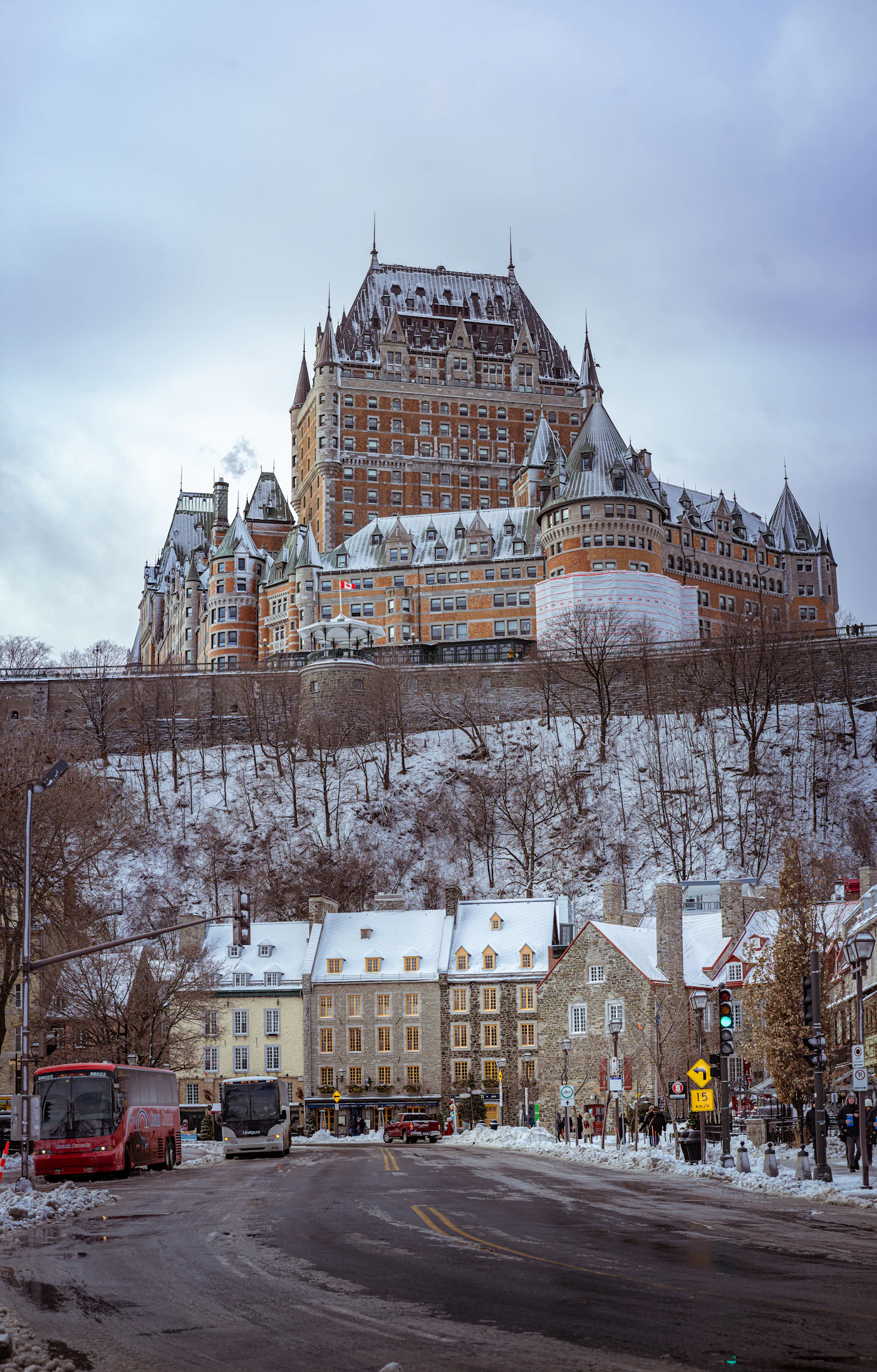
Quebec City is the only walled city north of Mexico, a UNESCO World Heritage Site, and arguably the most atmospheric urban destination in North America. Walking its cobblestone streets, with the Château Frontenac looming above and the St. Lawrence River glittering below, it is genuinely difficult to believe you haven't been transported to 17th-century France — or at least a very good approximation of it.
Founded by Samuel de Champlain in 1608, Quebec City is 418 years old in 2026 — older than most North American cities by at least a century. Its historic core, Vieux-Québec (Old Quebec), is divided into the Haute-Ville (Upper Town) on the cliff above the river and the Basse-Ville (Lower Town) at its base, connected by the iconic Escalier Casse-Cou (Breakneck Stairs) and a funicular that has operated since 1879. This guide will take you through everything from the castle-like hotel to the best restaurants tucked into centuries-old stone buildings.
Old Quebec: Upper Town (Haute-Ville)
The Haute-Ville sits atop Cap Diamant, a promontory rising 98 metres above the St. Lawrence River. The city walls — the only remaining fortified city walls in North America north of Mexico — encircle most of the upper town and can be walked in their entirety on the 4.6-kilometre circuit that takes you from the Citadel to the Saint-Jean Gate and back along the riverfront. The walk takes 90 minutes at a leisurely pace and provides continuously changing perspectives over the city and river.
Château Frontenac
The Fairmont Le Château Frontenac is the most photographed hotel in the world and the defining image of Quebec City. The château-style building, designed by American architect Bruce Price and opened in 1893, rises 98 metres above the cliffside to command views in every direction. Non-guests can explore the public areas of the ground floor and terrace — the Terrasse Dufferin immediately below the hotel offers the finest view of the Lower Town and the river, and is one of the great urban promenades in Canada in any season. In summer, street performers, artists, and food vendors line the terrace; in winter, a spectacular toboggan slide descends from the hotel to the Lower Town.
La Citadelle
The star-shaped British fortification built in the 1820s on the highest point of Cap Diamant remains an active military base — the only one in North America still occupied by a French-speaking regiment. The Changing of the Guard ceremony (late June through Labour Day, 10 a.m. daily) is a genuine spectacle worth arranging your morning around. The citadel museum traces the 400-year military history of the fortifications and contains artifacts from the 22nd Royal Regiment, which has defended the site since Confederation. Book a guided tour for access to the interior bastions.
Plains of Abraham
The Battlefields Park, known universally as the Plains of Abraham, is where the Battle of Quebec in 1759 determined the fate of North America. The 15-minute battle ended French dominance in Canada and delivered the continent to British control — though the French language, culture, and legal traditions survived and eventually became constitutionally protected. Today the plains are a beloved urban park used year-round for walking, cycling, cross-country skiing, and summer concerts. The Musée des plaines d'Abraham presents the history of the battle and its consequences with contemporary exhibits and multimedia installations.
Old Quebec: Lower Town (Basse-Ville)
The Basse-Ville is Quebec City's oldest neighbourhood, built on the narrow ledge between the cliff and the river. Place Royale — the market square around which the French colony developed from 1608 — is surrounded by restored 17th- and 18th-century stone buildings and anchored by the Église Notre-Dame-des-Victoires, a small church built in 1688 that is the oldest stone church in North America. The square has been meticulously restored and is now partly pedestrianized; it can feel somewhat stage-set during summer peak hours but is magical early in the morning or in the off-season.
Rue du Petit-Champlain
North America's oldest commercial street is a narrow, steeply stepped lane descending from the Breakneck Stairs to the St. Lawrence waterfront. In summer, the street is decorated with flower boxes and lanterns; in winter, the deep snow and Christmas lights transform it into a scene that photographers travel across the continent to capture. The shops along the street sell Quebec-made crafts, maple products, and locally designed clothing — quality varies, but several galleries represent genuinely talented local artists.
The funicular connecting the Upper and Lower Town runs until 11 p.m. daily and costs $4.25 each way — a bargain for avoiding the steep stairs at the end of a long day. The Breakneck Stairs (Escalier Casse-Cou) are free and take about 3 minutes; they're slippery in winter and a genuine workout in summer heat.
Quebec City Festivals and Events 2026
Quebec City's event calendar is one of the most spectacular in Canada. The city transforms entirely with each major festival, and timing your visit around one of these events will fundamentally change your experience.
- Quebec Winter Carnival (Carnaval de Québec) — Late January to February: The largest winter festival in the world draws over half a million visitors over 17 days. The snow sculptures at the Bonhomme Ice Palace, night parades, canoe races across ice-choked sections of the river, and the general atmosphere of Quebecers cheerfully celebrating winter at its most extreme make Carnaval one of the truly unmissable events in Canadian travel. Book accommodation a year in advance for peak Carnaval weekends.
- Festival d'été de Québec — Early July: The Summer Festival brings world-class musicians to the Plains of Abraham and multiple outdoor stages across the city for 11 days. Past headliners have included Paul McCartney, Kendrick Lamar, and Foo Fighters. The wristband system gives access to all outdoor shows — exceptional value for music lovers.
- New France Festival (Fêtes de la Nouvelle-France) — Early August: The city returns to the 17th century for five days of historical reenactment, period costumes, crafts demonstrations, and live music. Free to attend; the costumed participants create a genuinely atmospheric immersive experience.
Best Restaurants in Quebec City
Quebec City has one of the most exciting restaurant scenes in Canada, anchored in French technique but increasingly informed by Indigenous ingredients, local foraging, and the exceptional products of Quebec's agricultural heartland. The city's small size means its best restaurants are concentrated within walking distance of the old city walls.
- Aux Anciens Canadiens: Set in the Maison Jacquet (c. 1677), one of the oldest houses in Quebec City, this institution serves traditional habitant cuisine — tourtière, maple-cured ham, sugar pie — in a room where Samuel de Champlain's contemporaries might have felt at home. Touristy but genuinely good.
- Le Clan: Contemporary Quebec cuisine by chef Charles Gosselin, with a focus on local producers and seasonal menus. One of the finest tasting menus in the province.
- La Bûche: A younger, livelier take on Quebec comfort food — poutine, smoked meats, and maple-forward cocktails in a festive environment that works equally well for families and groups.
- Restaurant Portofino: The best Italian restaurant in the old city, reliably excellent over many years.
- Marché du Vieux-Port: The market at the Lower Town waterfront is the best place to buy regional products — cheeses, charcuterie, jams, maple syrup, and ciders — to assemble a riverside picnic.
Day Trips from Quebec City
Quebec City makes an excellent base for day trips into the surrounding region. The most popular is the 30-minute drive to Montmorency Falls, where the Rivière Montmorency plunges 83 metres into the St. Lawrence — 30 metres higher than Niagara Falls, though considerably narrower. A gondola, cable car, and series of boardwalks and suspension bridges provide access to the falls from multiple angles. In winter, the spray creates an ice cone at the base that grows to 30 metres high and is used for ice climbing.
The Île d'Orléans, a rural island connected to the mainland by a single bridge 15 minutes from Old Quebec, feels like stepping back 50 years. The island's six parishes produce strawberries, apples, wine, and maple products sold at roadside farm stands along the 67-kilometre perimeter road. The island's cheese producers and cideries are among the finest in Quebec.
Charlevoix — the dramatic region of fjords, mountains, and artist's villages east of Quebec City along the north shore of the St. Lawrence — is worth two or three days on its own. The town of Baie-Saint-Paul has more gallery space per capita than anywhere in Canada and is the creative heartland of contemporary Quebec art.
Practical Tips for Quebec City
- Most signage in Old Quebec is in French only; menus are predominantly French, though virtually all restaurant staff speak excellent English. A few words of French (bonjour, merci, s'il vous plaît) go a long way in establishing goodwill.
- The old city is highly walkable — a good pair of walking shoes is essential. Cobblestones are genuinely hard on wheeled luggage; hand-carry your bag from the taxi stand to your hotel.
- Parking inside the old city walls is extremely limited and expensive. Use the park-and-ride lots outside the walls or take a taxi from Jean Lesage International Airport (YQB) directly to your hotel.
- The old city becomes very crowded in July and August and during Carnaval in February. Shoulder seasons (May, June, September, October) offer more comfortable exploration and better restaurant reservations.
- Budget approximately CAD $150–$300 per person per day for mid-range accommodation, meals at sit-down restaurants, and entrance fees to major attractions.
A Quebec City travel guidebook with neighbourhood maps is invaluable for navigating the twisting streets of the old city. For winter visits, a good pair of waterproof insulated winter boots is non-negotiable — the cobblestones get icy and the Carnaval involves significant outdoor time. And for photography enthusiasts capturing the city's spectacular architecture, a lightweight travel tripod makes a real difference for low-light shots of illuminated historic buildings at dusk.
Discover More of Canada
From Quebec City to Vancouver Island — our guides cover every corner of Canada.
Browse All Guides