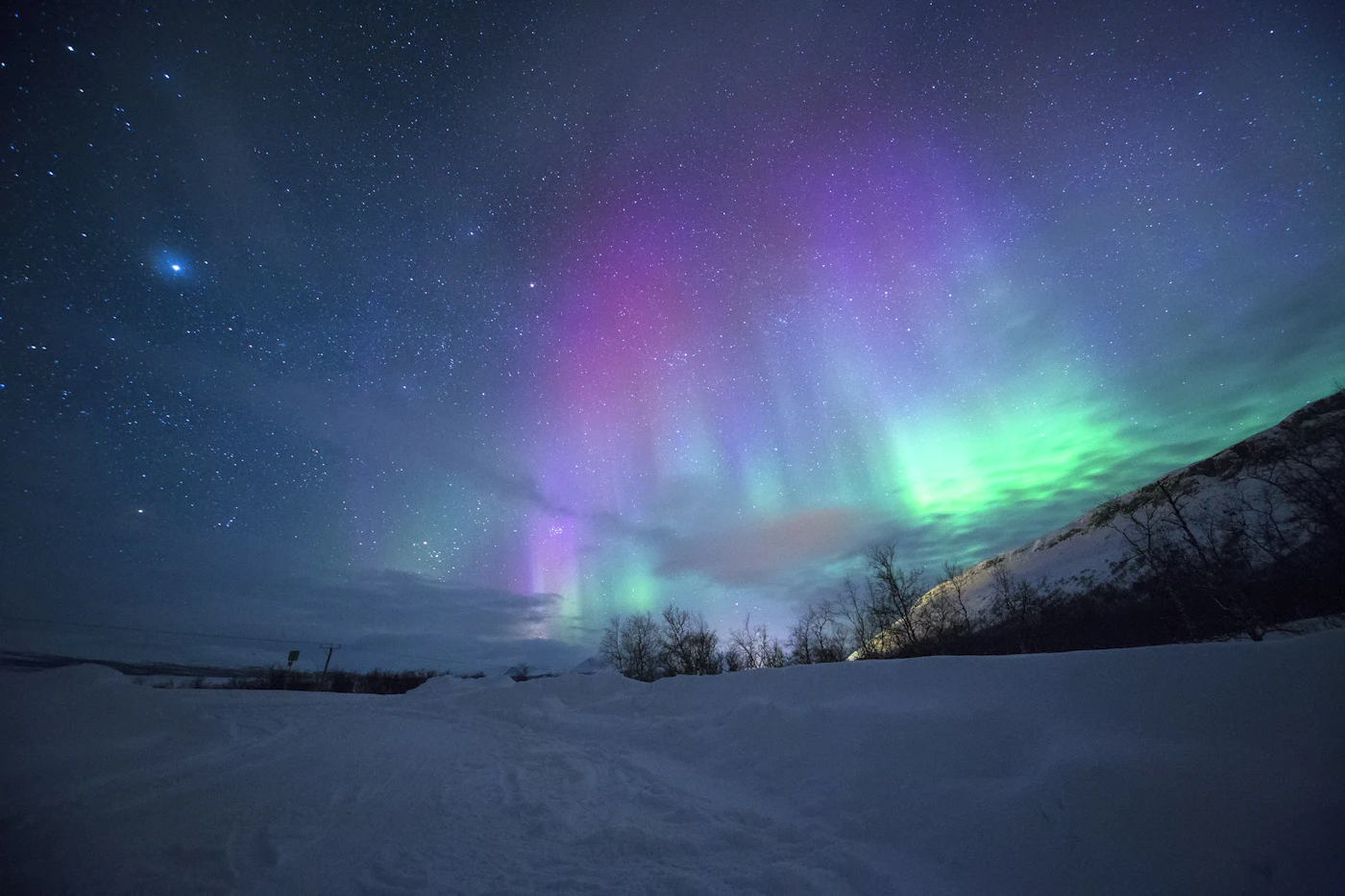
The Yukon is not a destination for the timid. This vast, largely roadless territory in Canada's northwest — bigger than California, home to fewer than 45,000 people — demands something from its visitors: patience, flexibility, and a genuine appetite for wilderness. In return, it offers experiences unavailable anywhere else on Earth: curtains of aurora borealis rippling across a sub-zero sky, grizzly bears grazing on alpine tundra, and the eerie silence of a landscape that has barely changed since the last Ice Age. This is where the Klondike Gold Rush made and broke a hundred thousand fortunes, and where the wildest road in North America, the Dempster Highway, ventures past the Arctic Circle into a world of permafrost and migrating caribou.
Why the Yukon?
Canada's north is vast and varied, but the Yukon occupies a unique place in the national imagination. It was here, in 1896, that a gold discovery in the creeks near present-day Dawson City triggered one of the greatest mass migrations in North American history — the Klondike Gold Rush. Within two years, 100,000 people had attempted the journey north; perhaps 30,000 arrived; fewer than 4,000 found any gold. The boom lasted less than a decade, but it left behind ghost towns, heritage buildings, and a mythology that Robert Service, the "Bard of the Yukon," immortalized in verse that is still recited in Dawson City today.
But the Gold Rush is only one layer of the Yukon's appeal. The territory contains some of the most spectacular mountain wilderness on the continent, in Kluane National Park, home to the largest non-polar icefields in the world. Its rivers — the Yukon, the Tatshenshini, the Alsek — are among the finest canoe and kayak routes on Earth. And its dark winter skies, well north of the interference of urban light pollution, offer among the most reliable northern lights viewing in Canada. For adventurous travellers, the Yukon is a bucket-list destination of the highest order.
Whitehorse Erik Nielsen International Airport (YXY) receives flights from Vancouver, Calgary, and Edmonton year-round, with connections from Toronto and Montreal. The Alaska Highway connects Whitehorse to British Columbia via Dawson Creek (about 20 hours by road). Renting a car or campervan in Whitehorse is the most practical way to explore the territory.
Northern Lights in the Yukon
The Yukon is one of the premier aurora borealis destinations in the world. Whitehorse sits almost directly beneath the auroral oval — the ring around the magnetic pole where solar particles collide with the atmosphere to produce the northern lights — and the territory's low population density ensures minimal light pollution. The aurora season runs from late August through April, with peak activity during the equinoxes in September–October and February–March.
Aurora Viewing Near Whitehorse
The best aurora viewing requires driving 20–30 minutes outside Whitehorse to escape the city's modest light dome. Miles Canyon, Marsh Lake, and the Fish Lake Road area are popular spots with locals. For beginners, guided aurora tours are widely available from Whitehorse operators, many of whom provide transportation, hot drinks, and professional photography assistance. On nights of strong solar activity, the lights can be visible even from the city centre.
- Download a free aurora forecast app — KP index of 3+ is sufficient for good viewing in the Yukon
- Dress in extreme cold-weather layers; winter nights routinely reach -20°C to -40°C
- New moon periods offer the darkest skies and best contrast for photography
- The aurora is visible on roughly 200 nights per year in the Whitehorse area
Kluane National Park
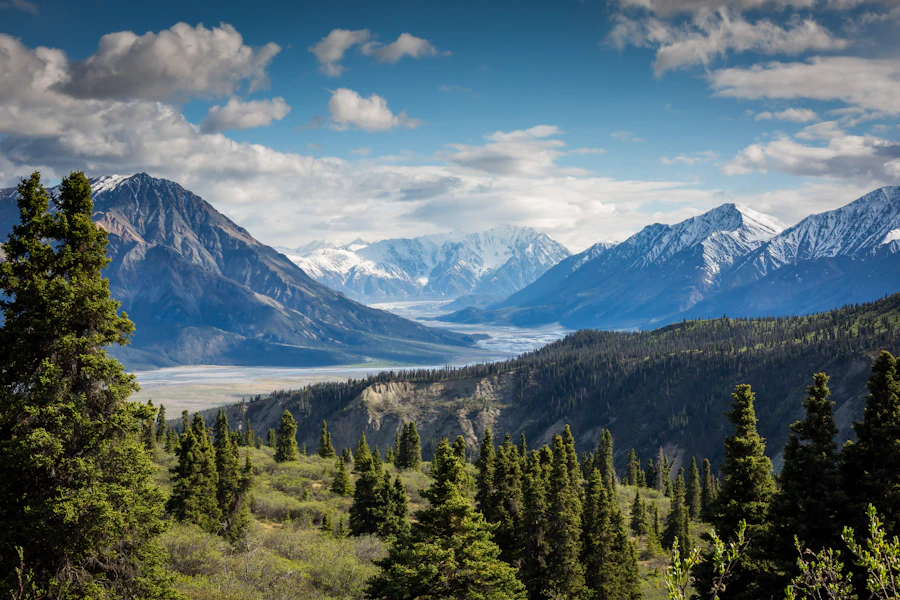
Kluane National Park and Reserve, in the southwestern corner of the Yukon, protects one of the world's great wilderness landscapes. The park is anchored by the St. Elias Mountains — the highest coastal range on Earth — and the massive Kluane Icefields, which cover roughly 22,000 square kilometres and represent the largest non-polar icefields in the world. Mount Logan, Canada's highest peak at 5,959 metres, rises within the park boundaries.
Kluane National Park & Reserve
Most visitors experience Kluane from the Alaska Highway, which runs along the park's eastern edge beside Kluane Lake — one of the largest natural lakes in the Yukon and a stunning turquoise-blue at the foot of the mountains. Day hikes are accessible from the park's eastern side, and the Auriol Trail and King's Throne hike offer stunning views into the alpine zone. For serious mountaineers and ski tourers, the park's interior is one of the most demanding and spectacular environments in North America.
- Glacier flightseeing from Haines Junction — one of the most dramatic aerial experiences in Canada
- King's Throne hike: 15 km, challenging, rewards with views over Kathleen Lake and the mountains
- Bear viewing from the highway — the park has significant grizzly bear and black bear populations
Dawson City and the Klondike
Dawson City, at the confluence of the Yukon and Klondike rivers, was the beating heart of the 1898 Gold Rush. At its peak, the city had 40,000 residents, making it larger than Seattle at the time. Today, with a permanent population of barely 1,400, Dawson is one of the most atmospheric small towns in Canada — a perfectly preserved Victorian frontier city in the middle of one of the most remote inhabited regions of North America.
The Parks Canada historic sites here are exceptional: Diamond Tooth Gerties gambling hall still operates as Canada's oldest legal casino; the SS Keno sternwheeler sits dry-docked on the waterfront; and the Robert Service Cabin, where the poet lived while working for the Bank of Commerce, is a pilgrimage destination for fans of "The Cremation of Sam McGee." Gold panning is still possible in the creeks around Dawson, and Dredge No. 4 — an enormous gold-dredging machine abandoned in the 1960s — is a surreal industrial monument in the surrounding wilderness.
The Downtown Hotel in Dawson City offers one of the world's most unusual experiences: the Sourtoe Cocktail — any drink served with a genuine amputated human toe dropped into the glass. Club membership requires only that the toe touches your lips. Over 100,000 members have joined since 1973. A certificate is provided. The toe is real.
The Dempster Highway
The Dempster Highway is the most dramatic road in Canada. Stretching 735 kilometres from the Klondike Highway junction (40 km east of Dawson City) to Inuvik in the Northwest Territories — and continuing via winter ice road to Tuktoyaktuk on the Arctic Ocean — the Dempster crosses the Arctic Circle, traverses two mountain ranges, and passes through landscapes of subarctic tundra that feel genuinely prehistoric. It is the only public road in Canada that crosses the Arctic Circle.
Driving the Dempster is an adventure that demands preparation: the road is unpaved gravel for its entire length, two spare tires are strongly recommended, and services are sparse (fuel is available at Eagle Plains, roughly the midpoint). But for those prepared for the challenge, the Dempster delivers: the Tombstone Mountains in the south are among the most striking geological formations in Canada, the tundra fall colours in September are extraordinary, and the sense of remote wilderness is absolute.
Whitehorse: Capital of the North
Whitehorse, home to three-quarters of the Yukon's population, is a surprisingly cosmopolitan small city that serves as the gateway to the entire territory. The Yukon Beringia Interpretive Centre offers world-class exhibits on the Ice Age megafauna — mammoths, scimitar cats, giant short-faced bears — whose fossils are still found across the territory. The MacBride Museum of Yukon History provides an excellent overview of the Gold Rush era and First Nations cultures. Miles Canyon, a dramatic basalt gorge on the Yukon River just south of the city, was a famous obstacle on the Gold Rush trail and remains a beautiful natural attraction.
For active travellers, Whitehorse offers excellent mountain biking on Grey Mountain, world-class cross-country skiing at Mt. McIntyre Recreation Centre, and easy access to the Southern Lakes canoe circuit. For help planning a Whitehorse base and territory-wide adventure itinerary, see our complete Canada trip planning guide.
Yukon Wildlife
The Yukon's wildlife populations are extraordinary by any standard. The territory hosts significant grizzly bear and black bear populations, moose, woodland caribou, Dall sheep, mountain goats, wolves, wolverines, and lynx. The Porcupine caribou herd — one of the largest caribou herds in the world, with approximately 200,000 animals — undertakes an annual migration between its winter range in the boreal forest and its calving grounds on the Arctic coastal plain. Seeing the herd in motion, the ground literally shaking with thousands of hooves, is one of the great wildlife spectacles on Earth.
Practical Information
Suggested 7-Day Yukon Itinerary
Day 1–2 — Whitehorse: Arrive, settle in, visit the Beringia Centre and MacBride Museum. Evening aurora tour or Miles Canyon walk. Day 2: hike in the Southern Lakes area.
Day 3 — Alaska Highway to Haines Junction: Drive southwest to Haines Junction and Kluane National Park. Afternoon glacier flightseeing or hike the Auriol Trail. Overnight Haines Junction.
Day 4 — Kluane & Return: Morning King's Throne hike. Afternoon drive back along Kluane Lake with stops for photography and bear spotting. Return to Whitehorse.
Day 5 — Drive to Dawson City (5.5 hrs): Follow the Klondike Highway north through stunning river valleys. Stop at Five Finger Rapids. Arrive Dawson City evening.
Day 6 — Dawson City: Full day exploring Gold Rush heritage: Diamond Tooth Gerties, Robert Service Cabin, Dredge No. 4, gold panning. Sourtoe Cocktail at the Downtown Hotel.
Day 7 — Return South & Depart: Morning Dempster Highway day excursion into Tombstone Territorial Park. Return to Whitehorse for evening flight.
Ready to Explore the Yukon?
Build your complete northern Canada adventure with our trip planning guides and destination resources.
Best National Parks Complete Planning Guide